Old Impressions of Britain
What kind of impression did I used to have of Britain?
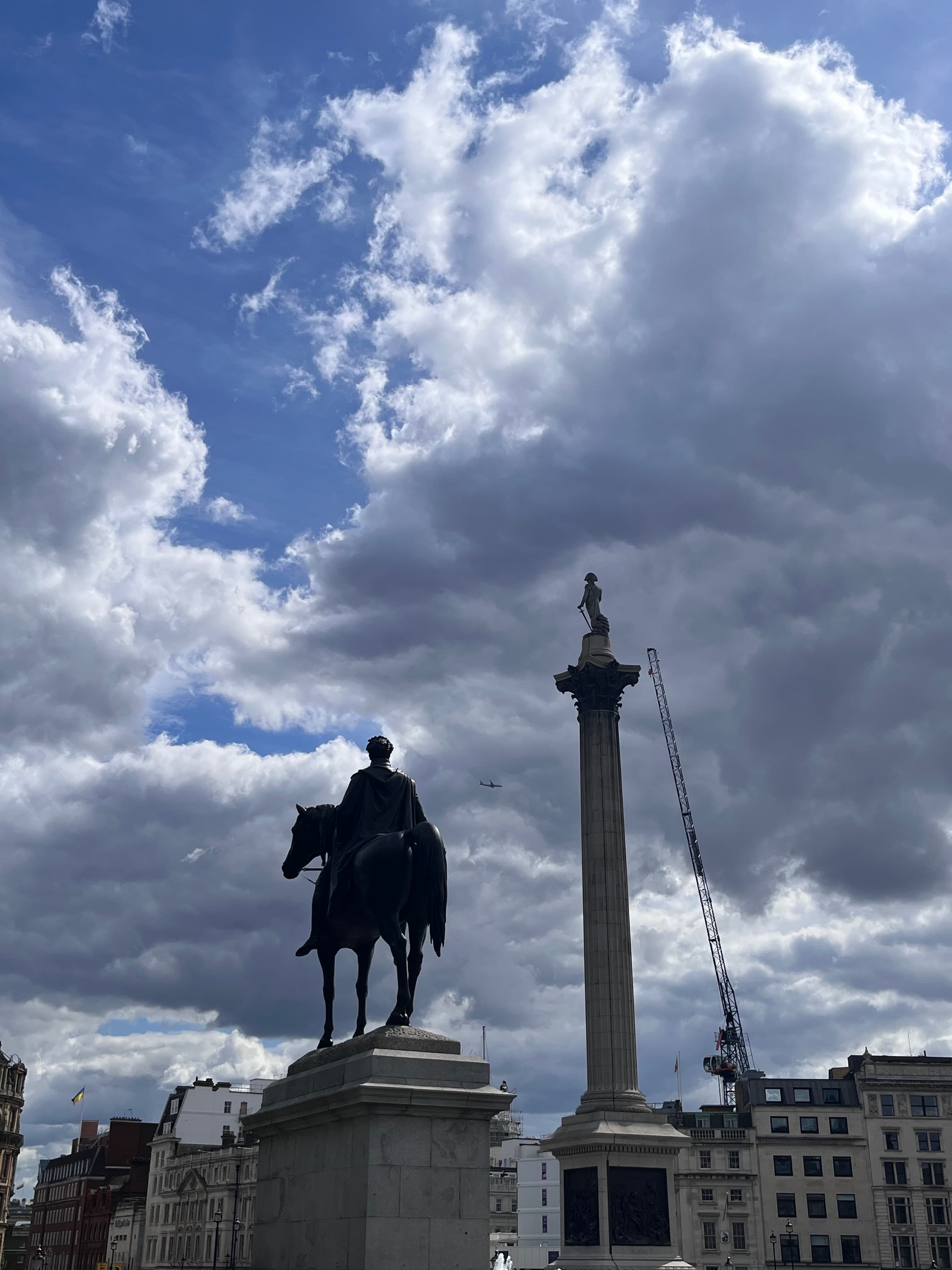
For me, Britain was an old capitalist country. It had deep reserves, huge global economic influence, and a strong voice in world affairs. But looking at it in recent years, I always feel that its international influence has been slowly receding, like a giant ship that once sailed across the world, still docked with dignity in the harbor, but whose whistle no longer sounds as loud as it once did.
Culturally, the old Londoners in my imagination were always very particular. Dark trench coats, polished leather shoes, speaking at an unhurried pace; if I exaggerated it a bit, my mind would even automatically add a top hat and a wooden-handled umbrella to the picture. Beyond that, there was Brexit, football, British accents, old-money neighborhoods, and a kind of capitalist temperament completely different from America’s.
Compared with America’s rough, direct, roaring capitalist machine, Britain, in my imagination, cared more about quality of life. It felt more restrained, and more elegant. It seemed in no hurry to prove how powerful it was, but instead folded history, order, and aesthetics into its streets, theatres, parks, and cloudy afternoons.
Of course, I also did not want to experience a place while carrying too many preset ideas. The simplest way was to buy a plane ticket and go.
First Impressions of London
I flew from Chicago to London at 7 p.m. on May 14, arriving in London just after 9 a.m. the next morning. In theory, that meant I still had a full day to explore, which sounded wonderful. In practice, my body was in Britain, while my soul was still stuck at 3 a.m. in Chicago.
Entering the UK through Heathrow was extremely smooth. The moment I got off the plane, I still could not help thinking to myself: things are finally looking up — I have arrived in the Empire on which the sun never sets.
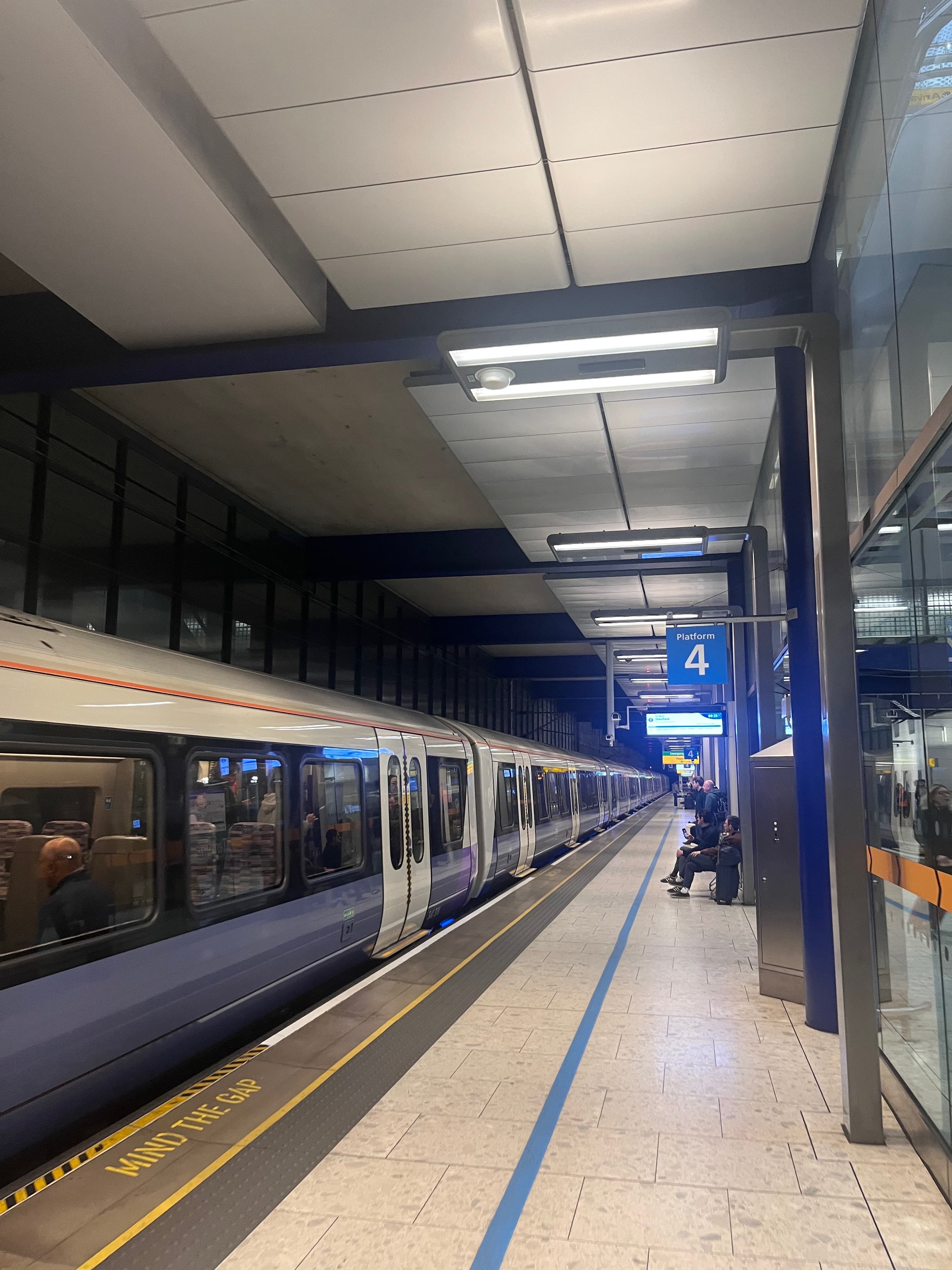
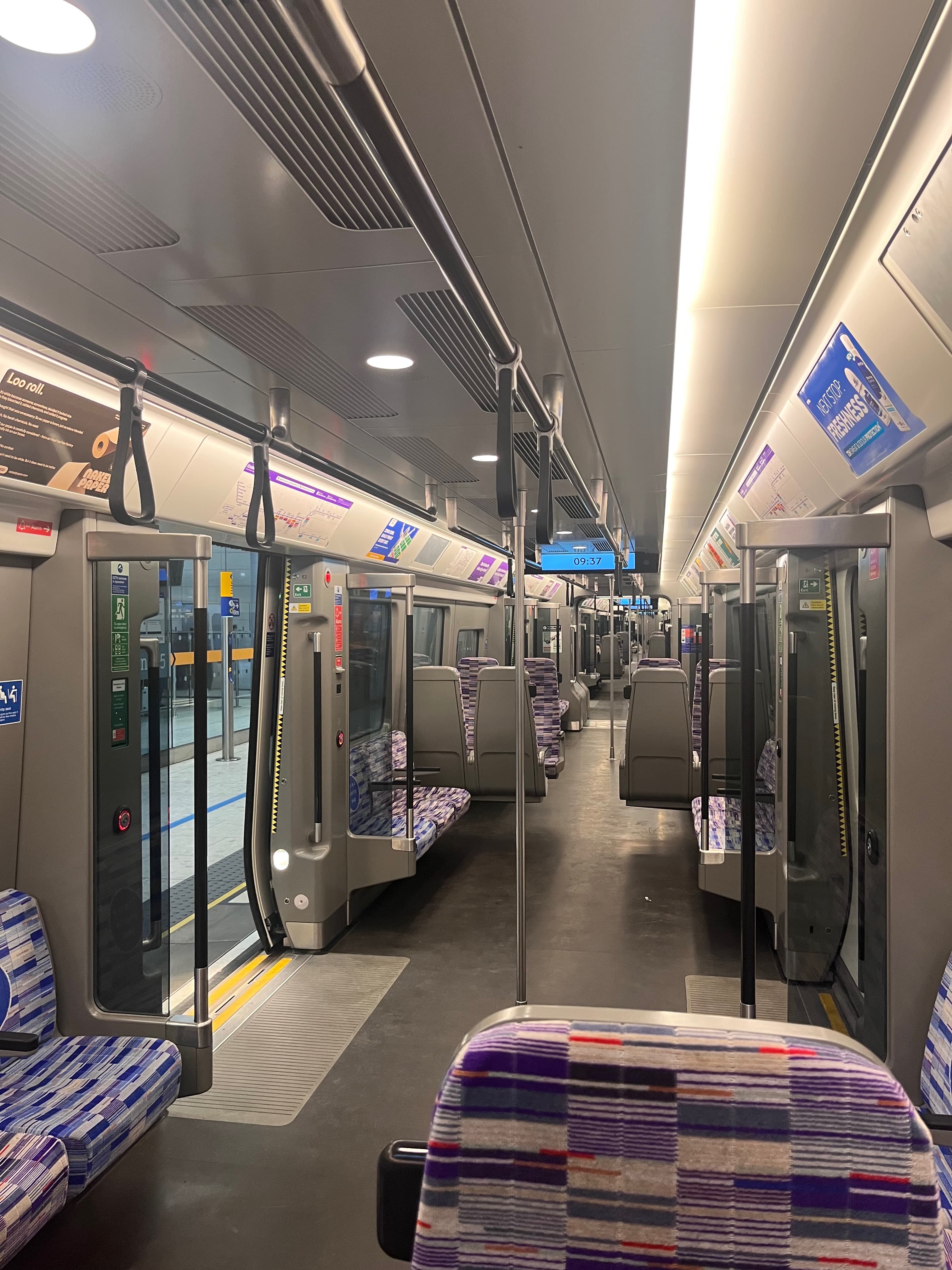
There are several ways to get from the airport into the city. The most expensive is the Heathrow Express, the mid-range option is the Elizabeth line, and the poorest but most cost-effective option is the Piccadilly line. In the end, I chose the mid-range Elizabeth line. I looked it up and found that the line only officially opened in 2022, which explains why the stations looked so new and the carriages were so clean and tidy. It felt nothing like taking the subway in America, where whether I arrive safely at the next station sometimes feels entirely up to fate.
Looking out of the window along the way, I realized that Britain actually has quite a few new buildings too. You can tell many of them were built in the past decade or two. But most of them are not tall, generally under ten stories, and they remain restrained enough to blend into the scale of the old city. It was cloudy that day, but visibility was very good. The sky looked like it had been covered with a thin grey-blue filter. I actually quite liked that kind of weather: damp, quiet, mild, and very much in line with the British atmosphere I had imagined.
Wandering Around London’s West End
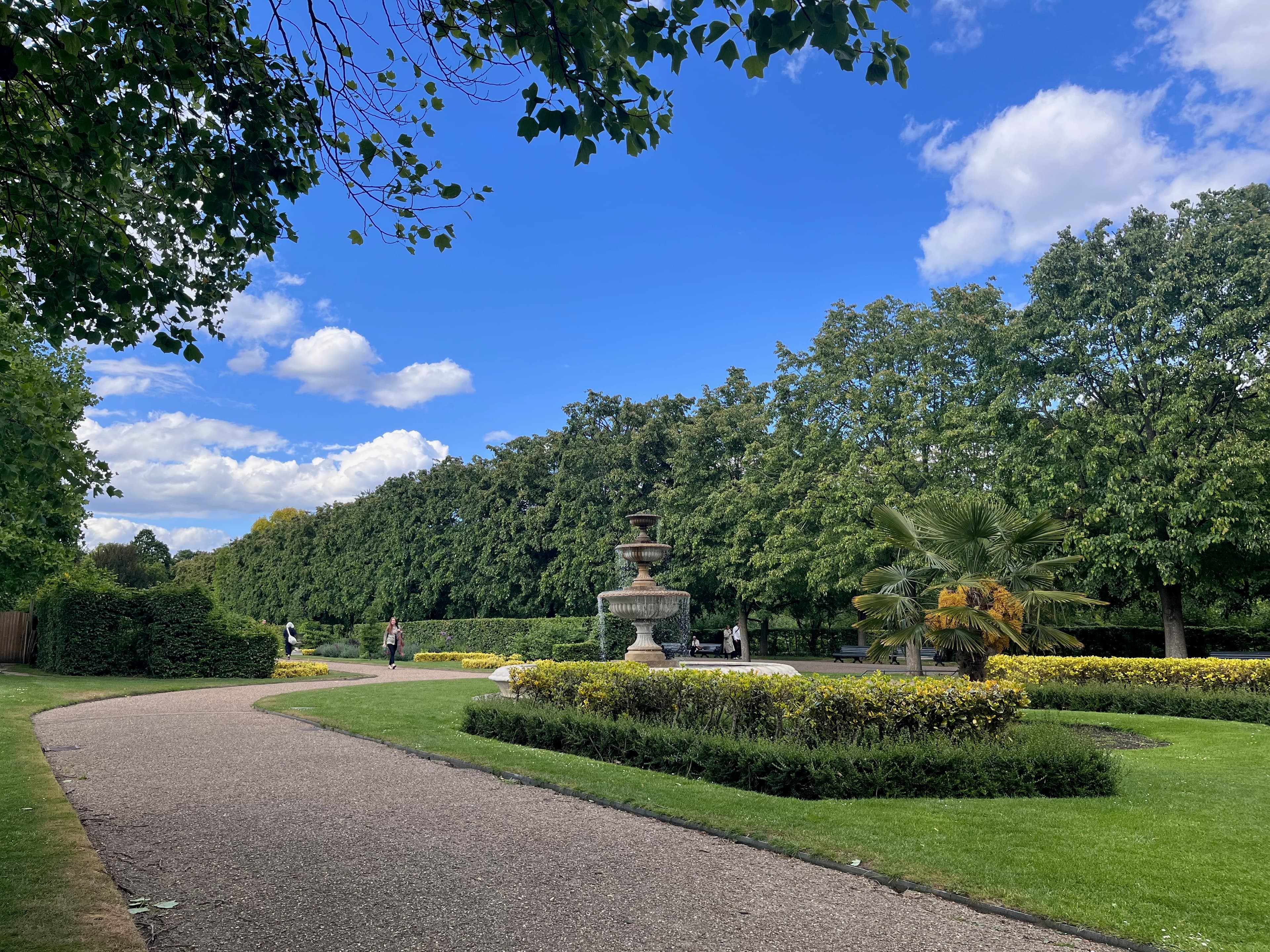
After arriving at my accommodation and dropping off my luggage, I rested for a bit and then got ready to walk around. Regent’s Park happened to be nearby.
Regent’s Park is one of London’s Royal Parks and a very classic green space in the city center. It has open lawns, formal gardens, and lakes. Queen Mary’s Gardens is famous for its rose garden, which opened to the public in 1932 and later came to include a large collection of roses. It does not have the same urban-square feeling as Hyde Park. Instead, it feels more like a quiet courtyard wrapped by West End residences and old streets.
The weather suddenly cleared up that day. Sunlight fell on my back, as if gently waking up the version of me still sleepwalking in Central Time. This is the most dangerous kind of sunlight for someone who has just landed after a long flight — it makes you mistakenly believe you are in good shape, while in reality your body is already throwing errors in the background.
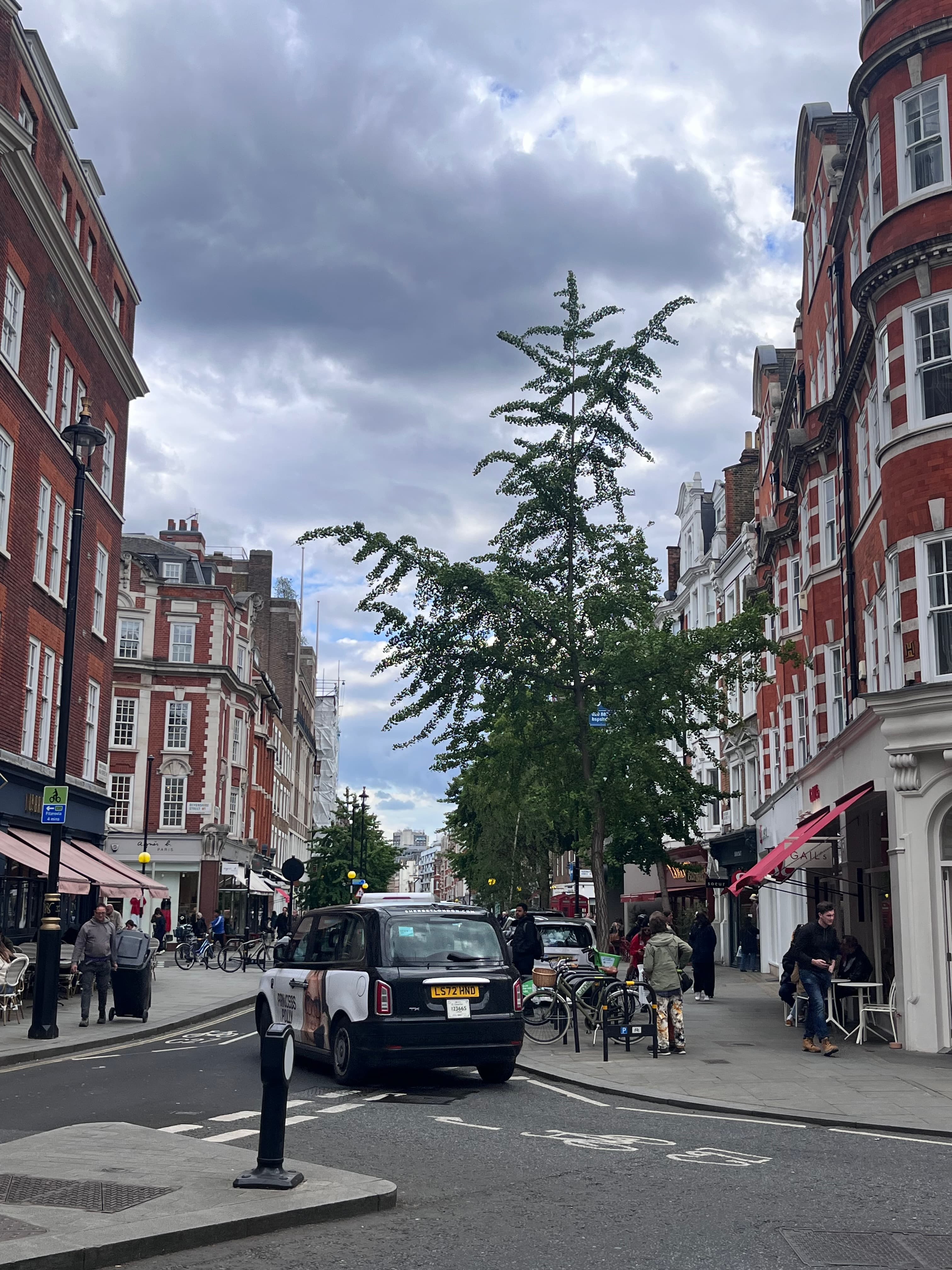
Walking south from the park, I reached a neighborhood called Marylebone. Looking back now, it was basically one of my favorite neighborhoods in London.
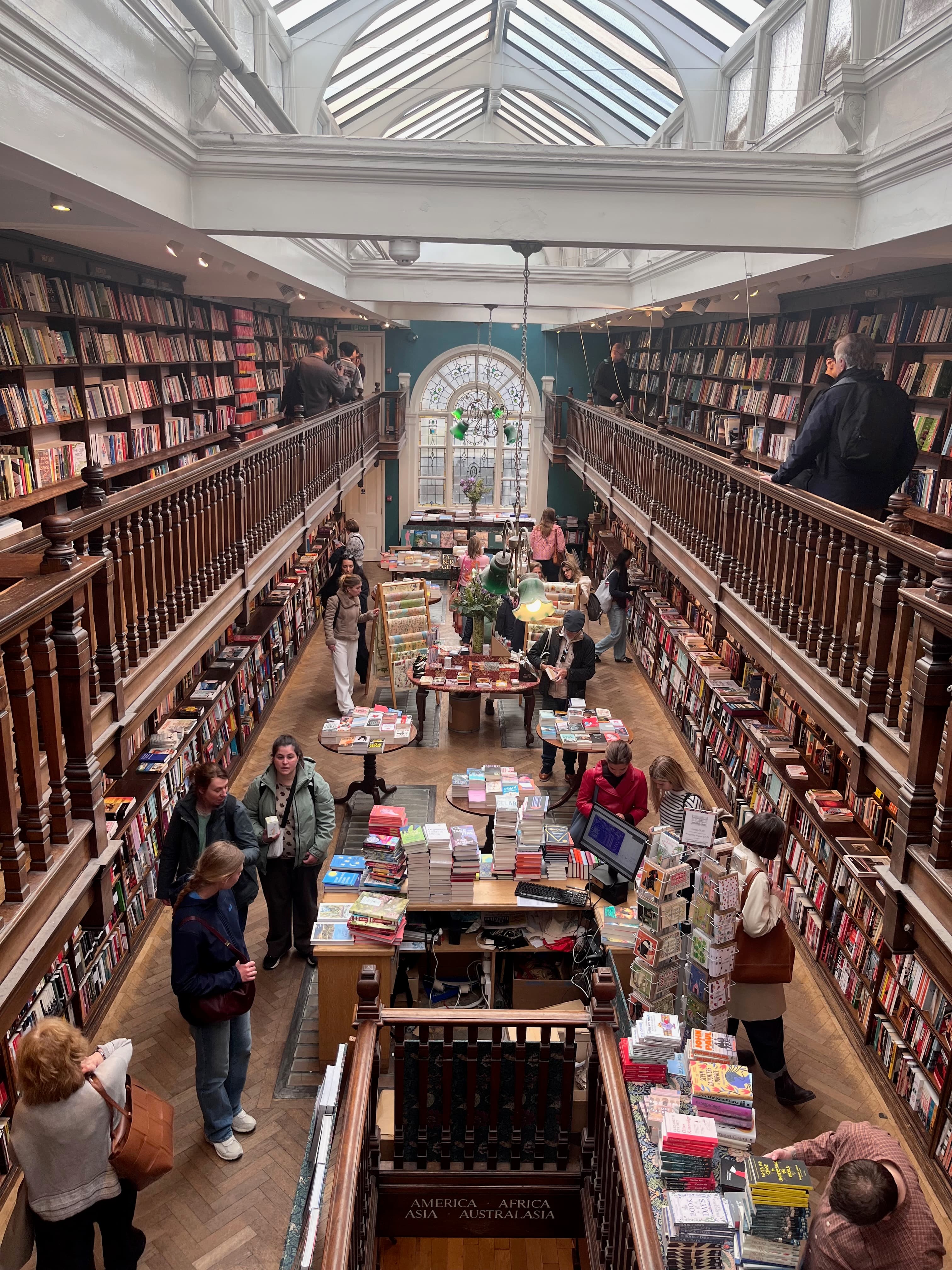
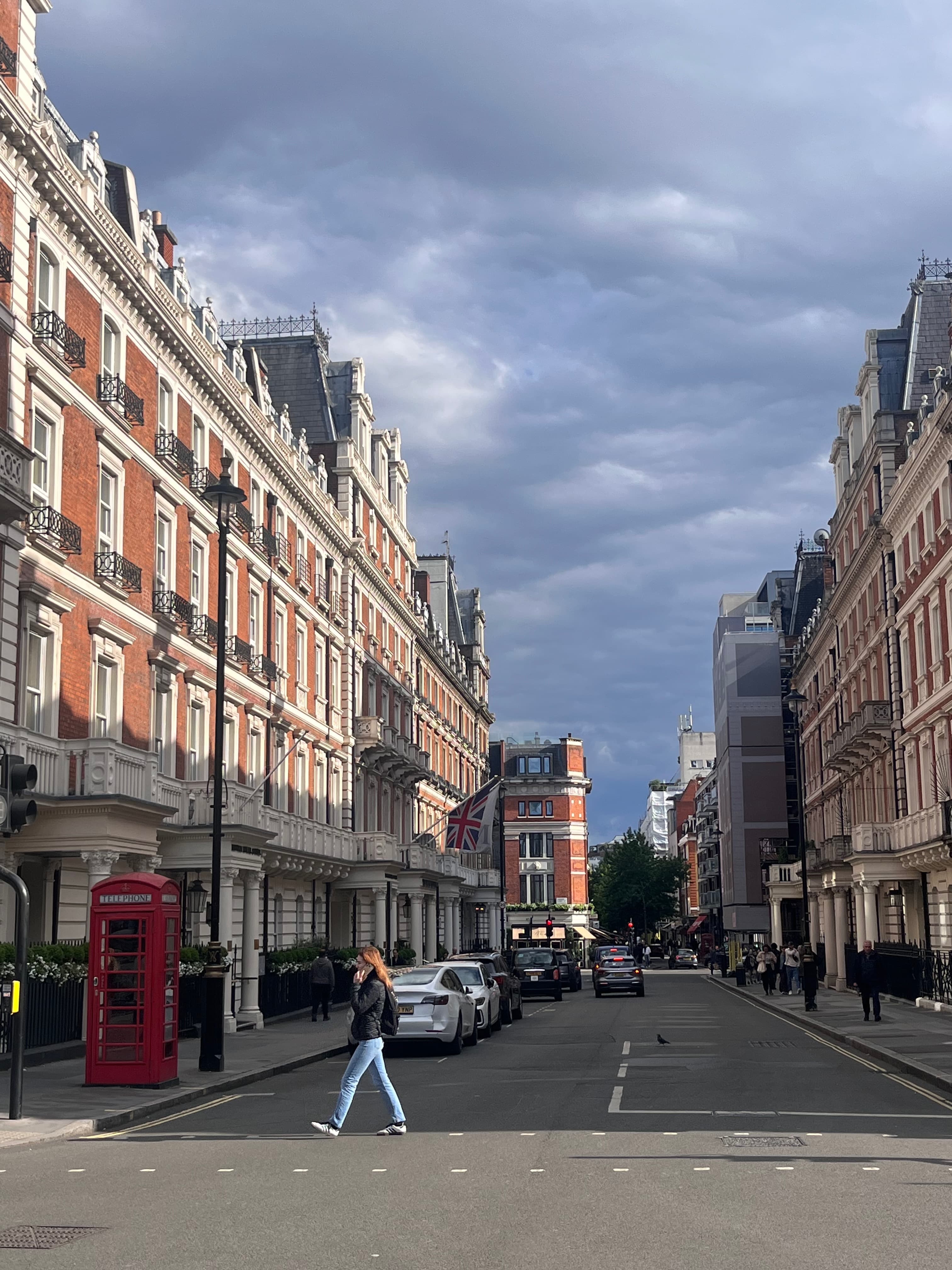
For historical reasons, West London as a whole is wealthier than the south and east. This difference is not the flashy kind of “rich.” Instead, it is hidden in the cleanliness of the streets, the taste of the shops, the façades of the houses, and the way pedestrians carry themselves. The streets of Marylebone are very clean, and every small shop has its own style. There are local cafés, beautifully designed furniture stores, and many bookshops where you can stumble into a random encounter with words.
This neighborhood is genuinely nice. There is basically no trash on the ground. The flowers on the street corners, the lights in the shop windows, and the tone of the shopkeepers’ voices all carry a kind of relaxed upper-middle-class feeling. I casually walked into a bookshop, and inside were visitors from all over the world. Sunlight came through the skylight above and landed on the bookshelves and wooden floor. At that moment, there was a strong sense of life, as if the entire city had suddenly come alive from a history textbook.
Since the main system was still dealing with jet lag, I could not make the first day too intense. I planned to walk east and take a look around Soho and Oxford Street.
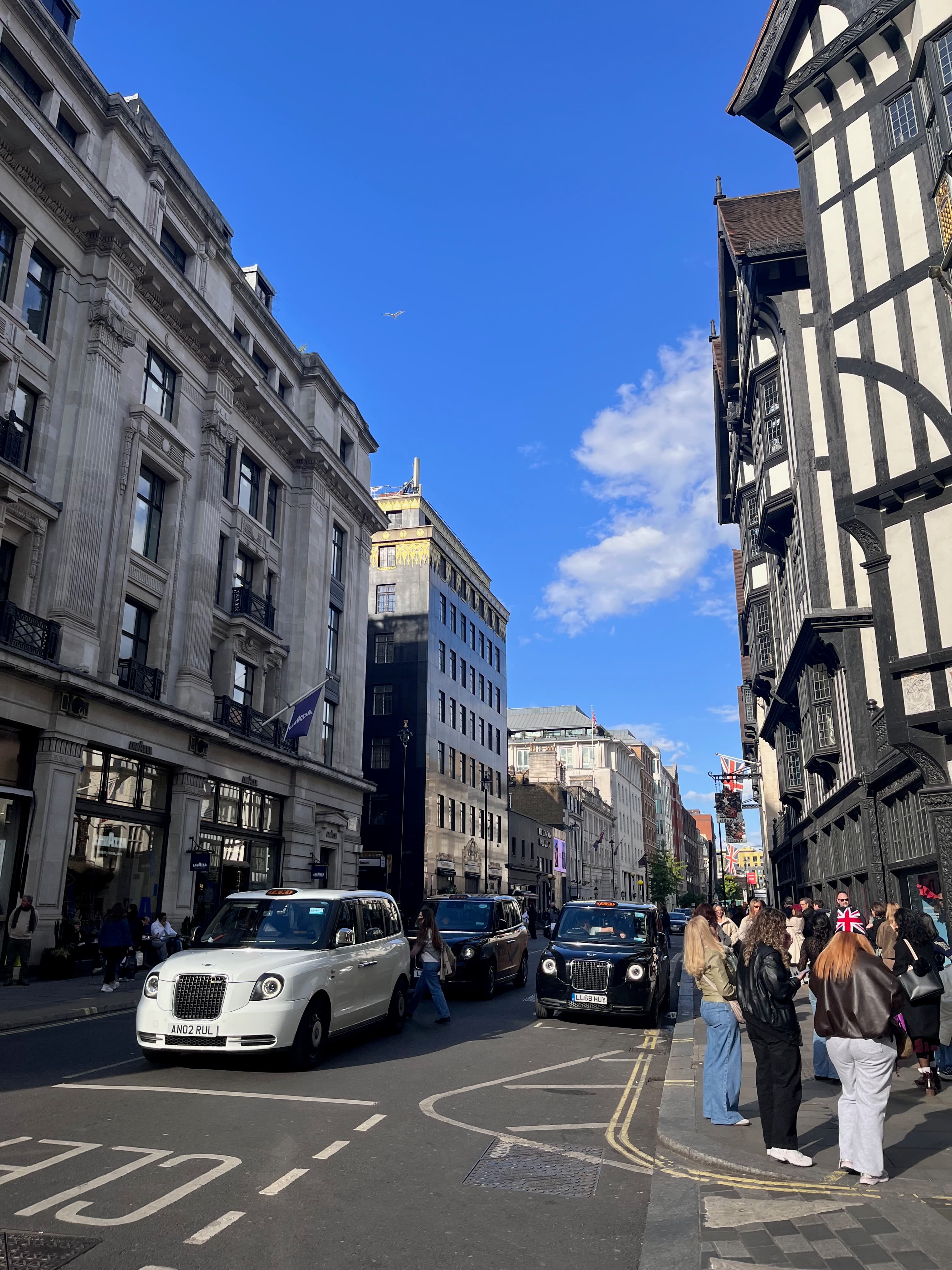
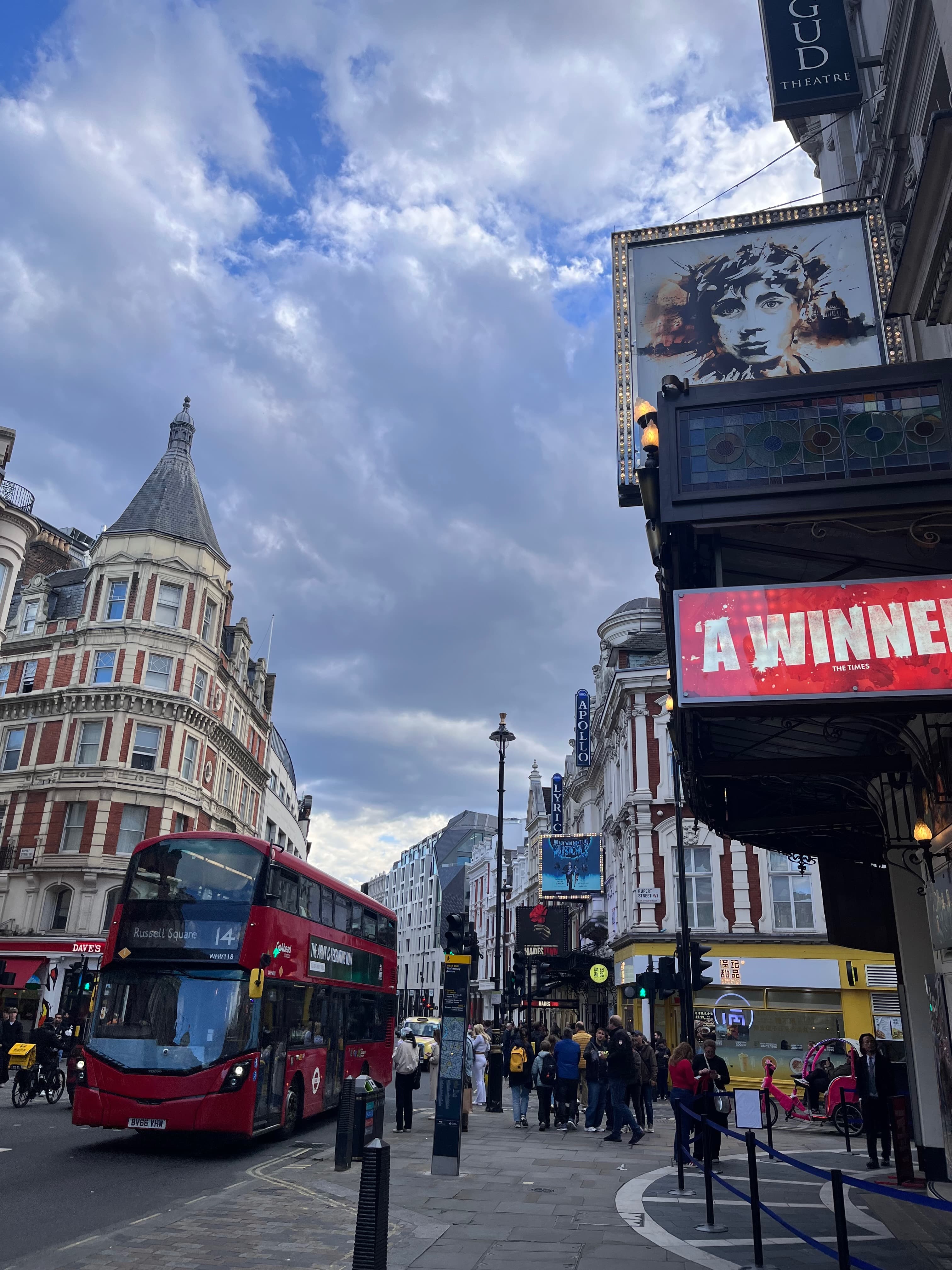
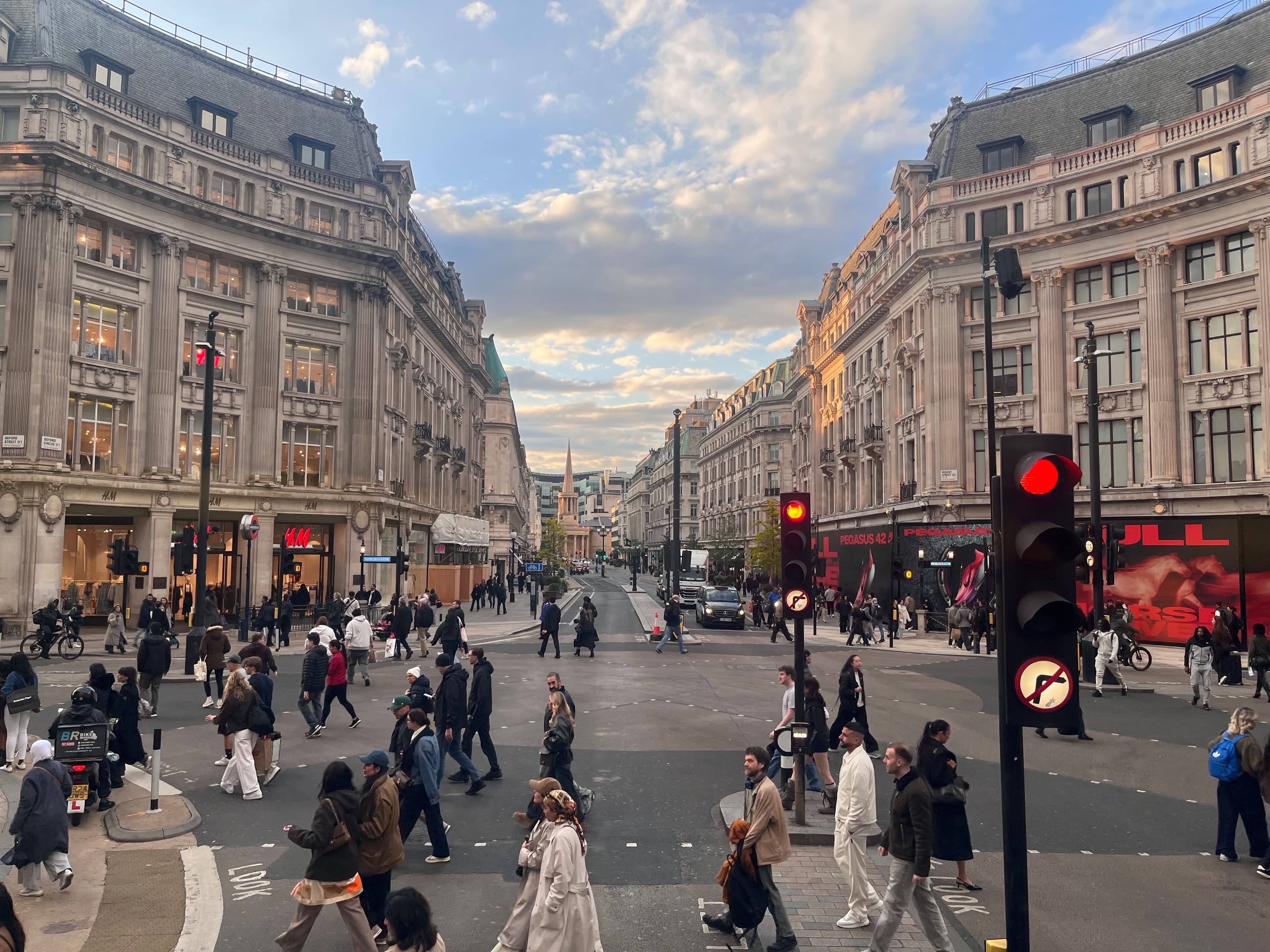
In this area, almost any random street photo looks scenic. The streets are old-fashioned, dignified, and carry the weight of accumulated history. As I walked toward Oxford Street, it became more like London’s shopping district. The crowds grew denser, and the commercial atmosphere became stronger. It was also very obvious that London’s streets are extremely narrow. Some main roads only have one or two lanes, and the blocks are very small.
I suddenly understood why London buses are double-deckers. Of course, part of it is because they look good, and the government has certainly turned them into a city symbol. But another reason is that, with London’s street scale, the city is nothing like America or China, where roads are wide and you can casually fit a huge bus into the turning radius. Double-decker buses are not purely romantic. They are also a practical solution grown out of the spatial limitations of an old city.
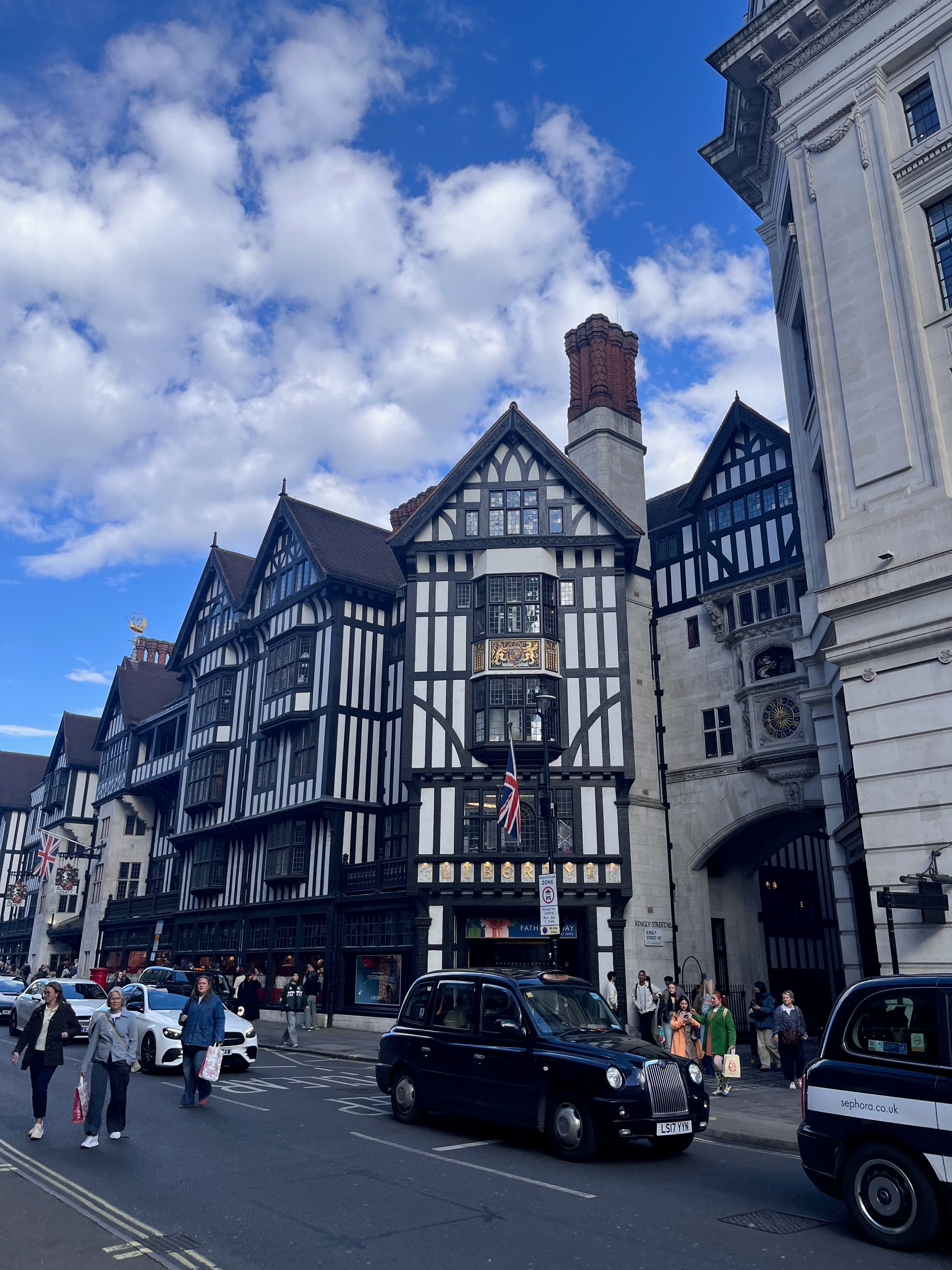
The first day was quite good overall. Although I was exhausted, I was in a good mood. So I went back early to rest and recharge for another day in London.
The Historic District
I woke up a little after 9 a.m. the next day, and the weather was still pretty good. Actually, I do not plan too much for each travel day. Of course, the major sights should be seen, but I care more about spending time feeling how local people live: how they commute, how they eat, how they walk, and how they continue living a modern life inside such an old city.
But still, you have to go see Big Ben, right? Hahahaha.
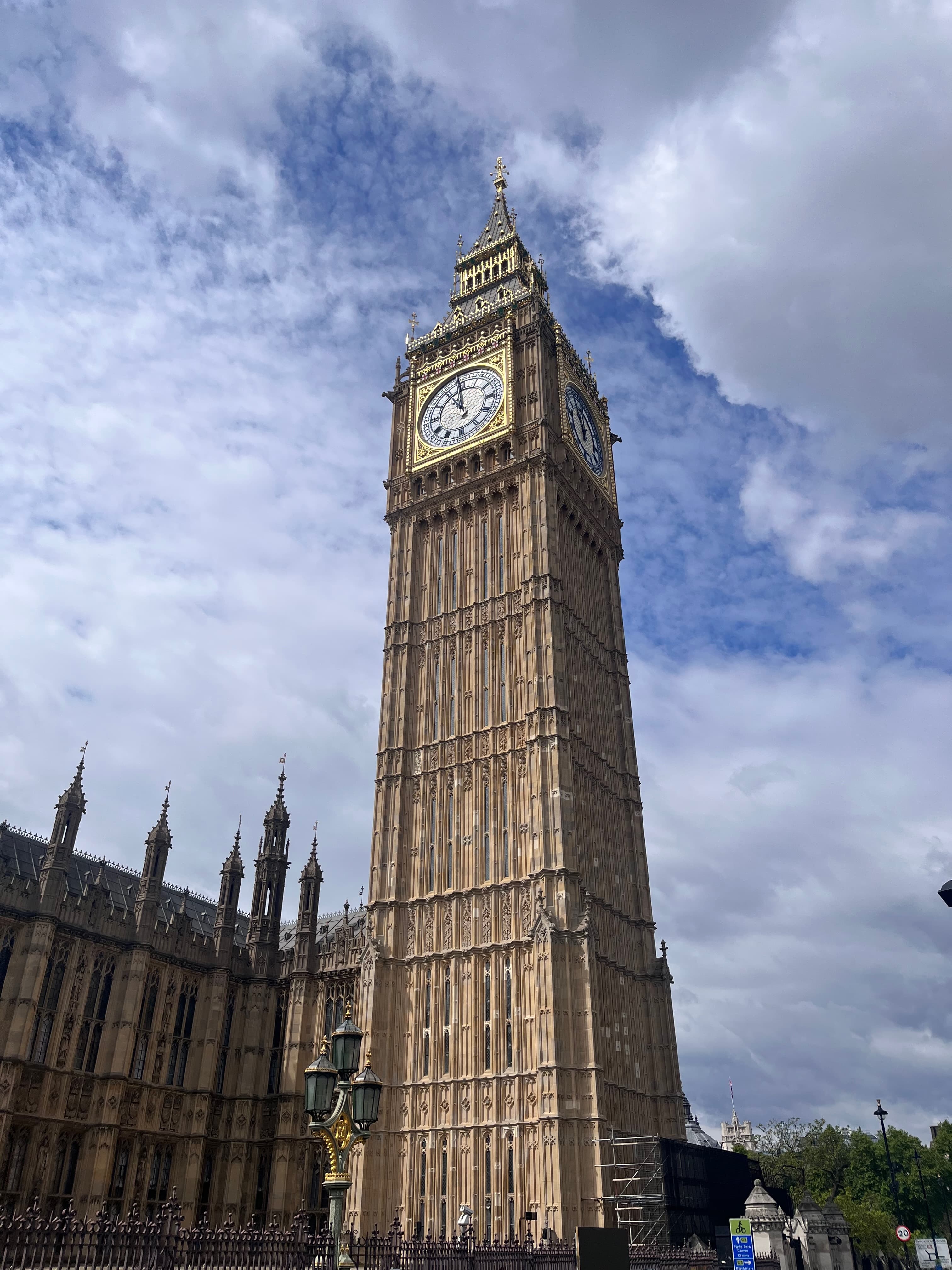

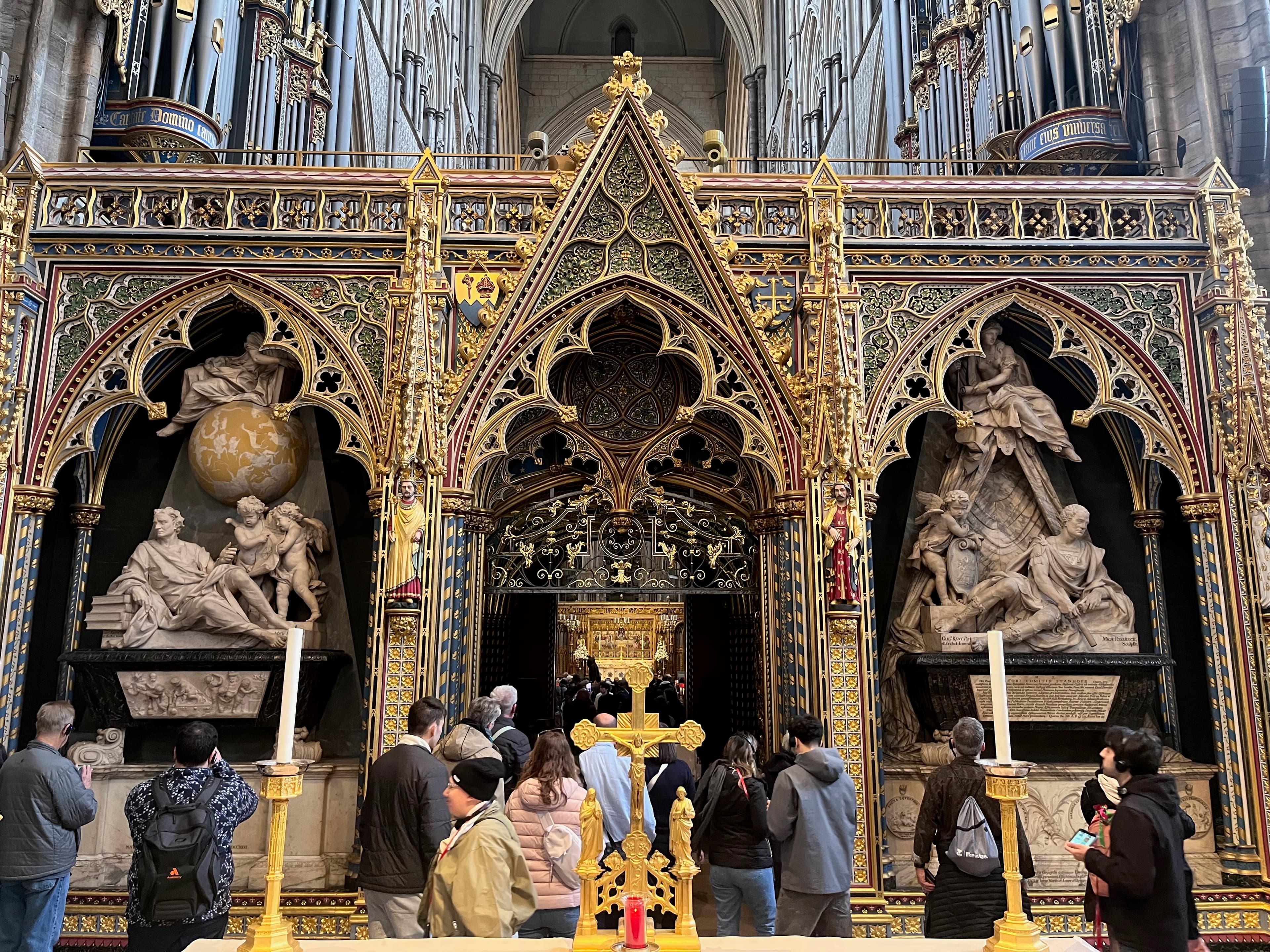
Right next to Big Ben is Westminster Abbey. It is not only a church, but also an important site in Britain’s national narrative: coronations of monarchs, royal weddings, national memorial services, and the burials and commemorations of many important figures are all connected to this place. The Poets’ Corner inside the abbey feels more like a memorial wall for British literature, where over a hundred poets, writers, and playwrights are either buried or commemorated, including Shakespeare, Jane Austen, the Brontë sisters, and Dickens.
Newton is indeed buried here, while Shakespeare is commemorated here rather than buried here. Overall, the decoration and sense of space inside were still quite impressive. It is just that I do not have a very strong personal resonance with specific Western religious art. Most of the time, I was observing how a nation compresses monarchy, literature, science, war, and faith into the same building.
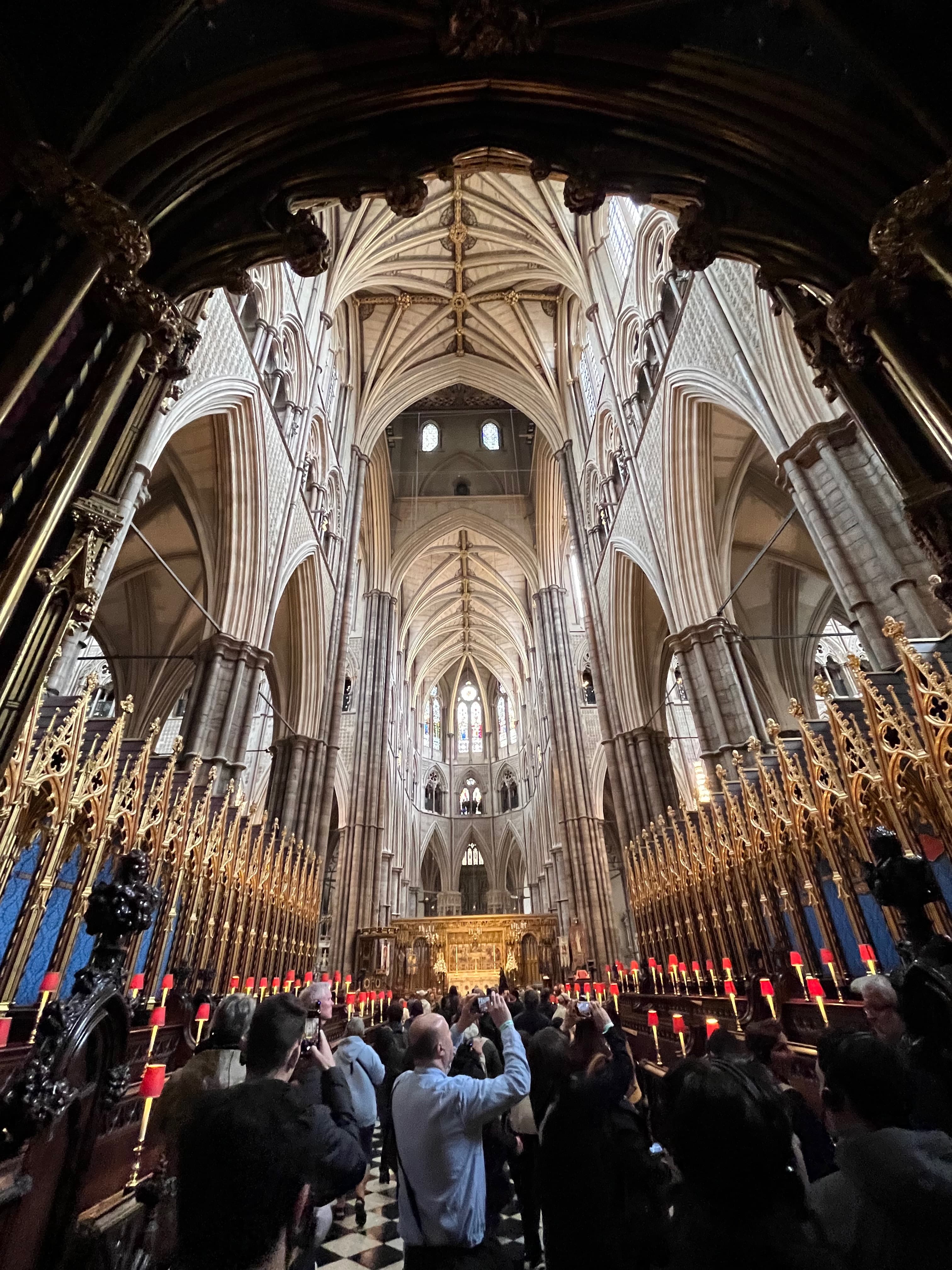
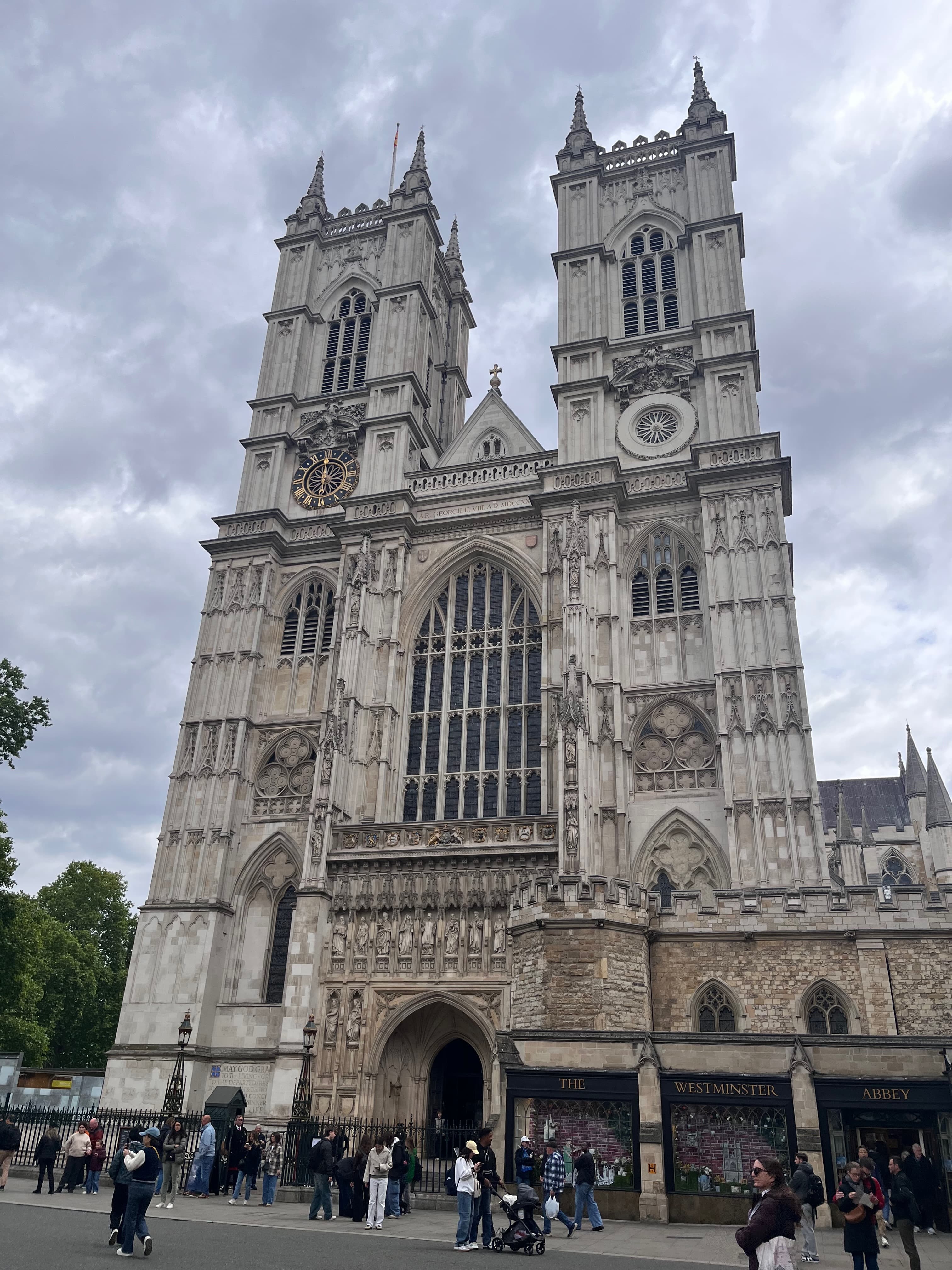
While visiting, I also caught up on a bit of British history. It turns out that after the Anglo-Saxons lost control, the English royal family was ruled for a long period by nobles from Normandy in France. The royal family and upper aristocracy spoke French, while ordinary people spoke English. Later, these Norman rulers were gradually assimilated, and English once again became the dominant language.
This part of history is quite interesting. I used to think of Britain as Britain and France as France, separated by the English Channel and developing separately. Only after coming here did I realize how deep France’s influence on British history really was. Many so-called “British traditions” were themselves born out of conquest, integration, confrontation, and long linguistic change.
A Brief Interlude
After leaving Westminster Abbey, I happened to run into a large protest in Britain. Crowds, slogans, police, road closures — the originally dignified political center suddenly turned into a huge emotional scene.
Later, after returning home, I read some discussions online. People said that in recent years, many locals in Britain have been deeply dissatisfied with the government: taxes, immigration, public services, housing pressure, cost of living — any one of these issues can ignite anger. The most real part of street politics is that it is not always a rigorous policy debate, but it directly lays out ordinary people’s anger, anxiety, and powerlessness in front of you.
From a tourist’s perspective, the scene was quite striking. During the day, I had just finished seeing monarchy, aristocracy, and imperial narratives inside Westminster Abbey. As soon as I walked out, I encountered modern Britons expressing dissatisfaction near Downing Street. The two sides of a country were placed right next to each other: on one side, the golden dome of history; on the other, the bills, tax forms, and protest signs of real life.
This actually made London feel more real to me. It is not a city that only exists on postcards. It also has cracks, arguments, and exhaustion beneath its dignified exterior.
West End Musical: Les Misérables
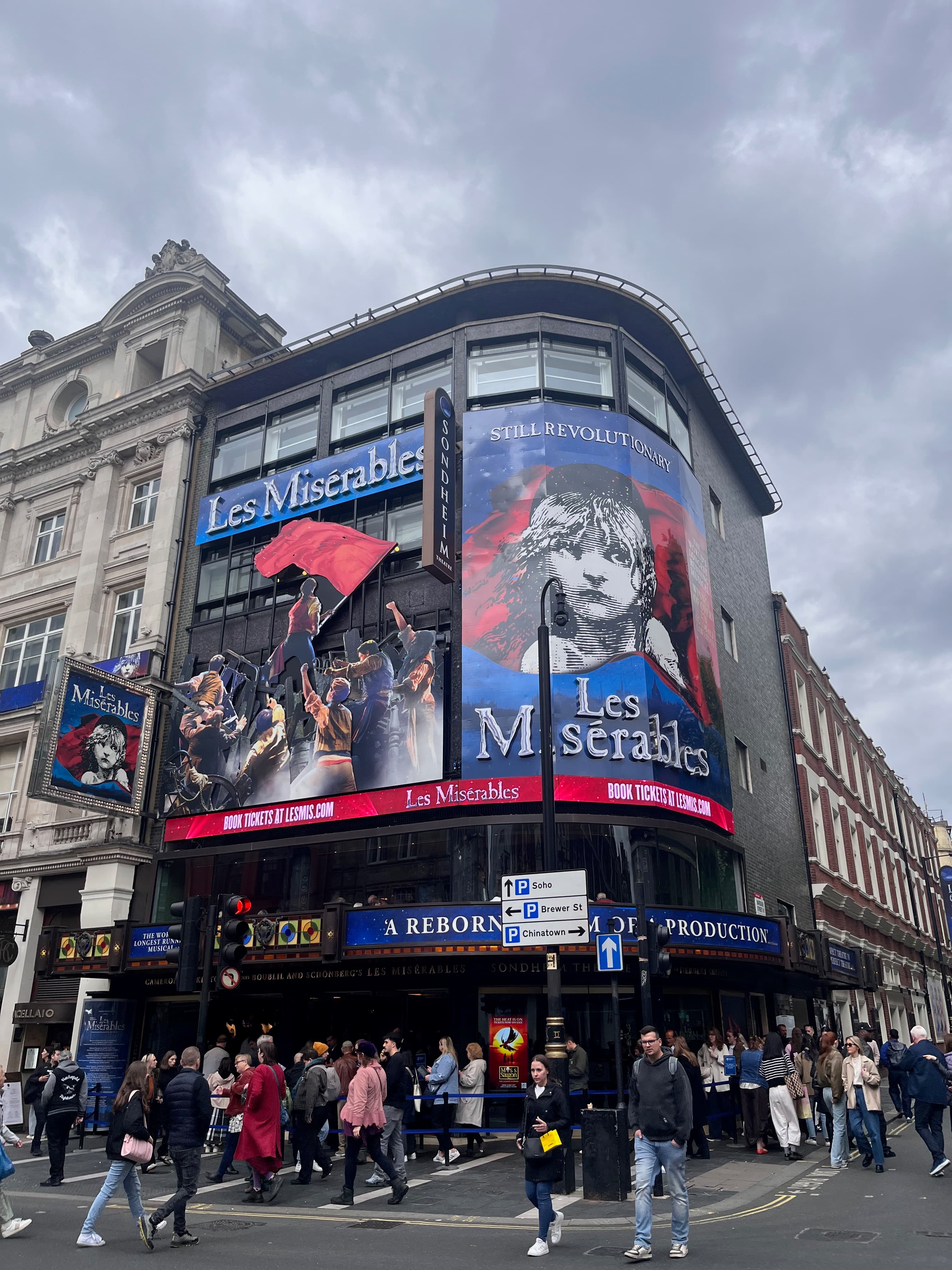
Because I did not want to walk too much every day, I bought a ticket for the musical Les Misérables the night before. £110, front row of the second level. I thought it was worth it.
The live singing and choreography were both excellent. The sound inside a theatre is not something headphones can replicate. Once the actors started singing, the emotion traveled directly through the air and hit you. I was genuinely moved several times, especially by the monologues of Fantine and Éponine. Fantine is someone pushed little by little into desperation by fate, while Éponine knows her love will never be returned, yet still turns love into sacrifice.
I love Éponine.

Compared with The Phantom of the Opera, I think Les Misérables moved me more. Maybe it is because it is not a gorgeous Gothic love story, but instead places poverty, dignity, faith, revolution, love, and failure directly in front of you. Its emotions feel more realistic and more rugged. You feel that these people are not far from you at all. They are simply using another language to sing out the lives of many ordinary people on stage.
After the show ended, thunderous applause filled the theatre. Looking back now, I think this musical can rank in the top two experiences of my entire UK trip.
Some Random Thoughts
After walking around for two days, my first impression of London remained very strong.
The city’s overall appearance is very well maintained. The architectural style is highly consistent, and the sense of history is complete. When you walk through the streets, it is easy to develop an illusion of “aristocratic atmosphere”: as if every building has a family story behind it, and every window has seen rain from the Victorian era.
But once you get closer, you realize that not many people on the street are dressed in the elegant suits I had imagined. Most people are just wearing black coats, jeans, sneakers, carrying a bag, and hurrying along with their heads down. Londoners are not always the Londoners from films and TV. In reality, they are more ordinary and more modern.
British people also do not seem as outgoing as Americans. Most people are emotionally steady, do not speak in an exaggerated way, and are relatively restrained in public spaces. The very outward, warm, always-ready-to-chat-with-strangers quality of Americans is much less common here. London feels more like a city that plays its emotions at a lower volume.
I like London’s transport. Public transportation is genuinely convenient. But I do not really like how cramped many building interiors are. Of course, that is understandable. After all, this is a historic city, not a modern metropolis like Chicago, built upward from flat land.
I like the historic appearance here. I like that even tourists can feel a certain “old money” and “aristocratic” atmosphere on the streets. But I do not like how some politicians always like to package themselves as nobles carrying international responsibilities, expanding influence while ignoring the real pressures faced by their own residents.
I also like the cultural diversity here. Art, exhibitions, and theatre are all very rich. On almost any evening, you can find a performance or event. But after eating Chinese food twice, I have to say: Chinese food in London is really expensive. So expensive that for a moment I wondered whether I was actually in Britain, or in some Bay Area modern Chinese restaurant that was extremely good at telling a design story.
I will keep wandering around for the next two days — visit the British Museum and Cambridge, and finally watch a Chelsea match.
Just send it.
-- Edited at Edinburgh Waverley
Login to leave a comment or like this post.